

Navigating the Cancer Path is tricky.
For most, doing so is completely new. There is no advanced training to learn how to do it right.
You just sort of get thrown into it and have to try your best to figure it all out as you go.
Well, having gone through it himself with his beloved Heather, our Managing Director,
Chris Miller, has some tips here below that can help.
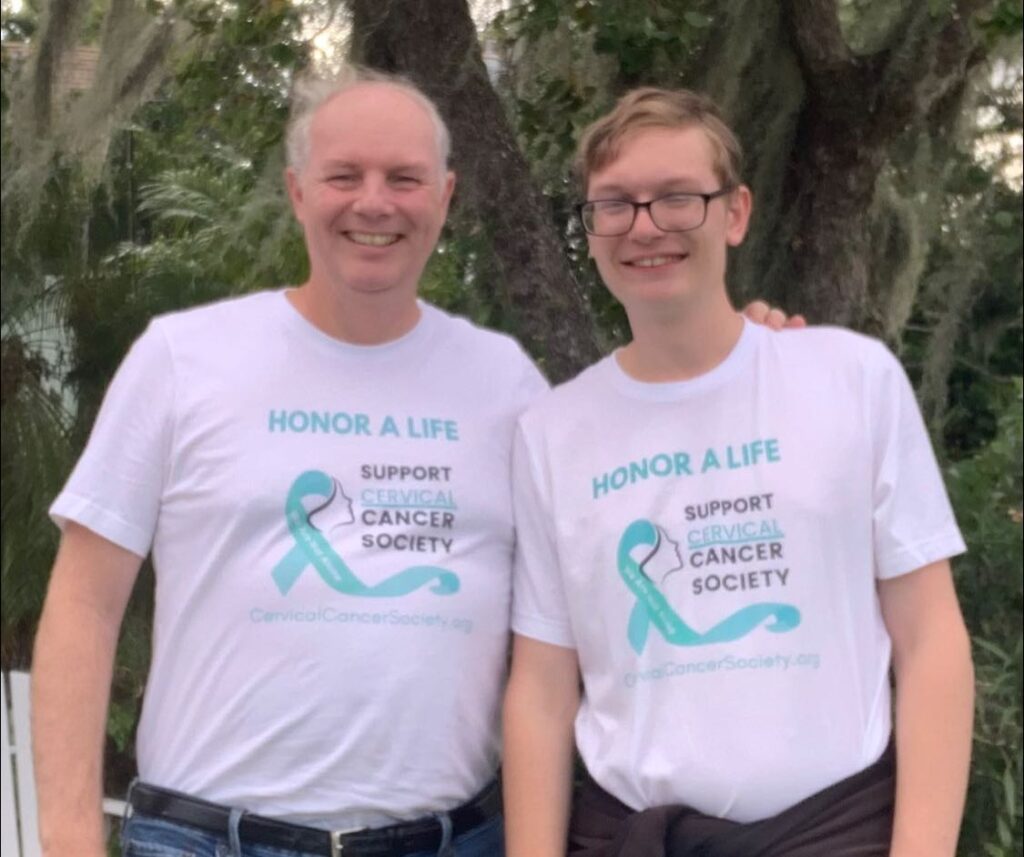
I supported Cervical Cancer Societ Heart with Chris Miller
Hi. I’m Chris Miller, and I would like to tell you what to expect when you get the word
that you have Cervical Cancer.
There are a lot of things you need to look out for, need to think about, and should be aware of in general.
My Heather and I went through it side by side, every step of the way, and the things I learned
along our journey were very revealing about the system and the processes you need to think about
if you want to get through it well.
My hope is that this information helps you in some way.
The Information Overload Problem
The first thing I will tell you is that the Hospital and Drs will bombard you with information,
and you WILL NOT remember even a third of it.
I don’t care what you think you know about yourself and how detail-oriented you think you are.
Trust me on this, and I’ll tell you why.
When the day comes that a Dr. looks you in the eye and tells you you have cancer,
that is basically all you can think about for the next 15–20 minutes.
They keep talking, but you aren’t hearing it. You’re just thinking,
“OMG, I have Cancer. What does this mean? Am I going to be ok?”
The list of things going on in your head is endless, and you are not listening.
For the Dr. on the other hand, it is business as usual.
Not being in your situation, they just keep talking, telling you your options,
what they know for certain, what they think, what they want to do next, etc;
completely unaware that you are not hearing them.
It doesn’t get much better in subsequent visits either.
Every visit with your Dr will be filled with too much information that can easily overwhelm.
It is for this reason I recommend you bring someone else with you,
and record the audio of each Dr visit with your phone so that you can go over it again later
and make sure you don’t miss, or forget, anything important.
Now, most Hospitals don’t want you doing this, so I recommend you ask up front if it is alright,
and tell them the reason why it is important.
If they have an issue after that, you could be in the wrong place.
If you feel comfortable with them however, and they don’t want you to record under any circumstances,
have them promise a print out of the details of the conversation before you leave.
Make sure that they don’t simply summarize tests and next steps,
but also include questions you asked, and the answers to them.
If they are unwilling to do that as well, you ARE in the wrong place.
Go somewhere else.
Remember this. To them, it’s a liability issue. For you, it could mean your life.
The Second Tip: Organization
The day you hear you have cancer, get life insurance that same day if you don’t already have it.
Please don’t misunderstand that comment. I don’t want you to perish,
but in the event that you do, the last thing you want to do is leave your loved ones behind
to pay the remainder of medical expenses, and make funeral arrangements out of pocket.
The day that you are diagnosed, nobody knows about it, and you are still insurable.
The day after that, once the records are written and recorded, that changes.
If you make sure you are covered on the same day, your insurance can still be inexpensive,
in the $10–20 range, instead of $120–300 range per month.
I tell you this because believe me, when you are going through cancer every dollar counts.
Also, as soon as possible, get a power of attorney.
Make sure it includes all needed areas to be covered so that if something happens to you,
and you cannot make the decisions for yourself,
someone YOU TRUST WITH YOUR LIFE has the legal authority to act on your behalf.
I cannot tell you how much this serves a vital importance in your care.
Keep the original for yourself, and bring it with you to EVERYTHING.
Never leave for any medical visit without it.
Additionally, give a copy to the hospital, and to each department you work with in the hospital.
You would be surprised how many times they will tell you they don’t have a copy of it,
even though you gave it to them.
Make certain it includes as much detail as it can to protect you from them.
Dr. Advice, Hospital Policy, and Second Opinions
When you are going through cancer, it is vital to get a second, or even a third opinion.
Doctors really don’t know everything, despite the fancy white coat implying otherwise.
Question EVERYTHING.
Nobody knows your body, mind, and spirit better than you do.
Certainly not some Dr you only just met and only spends 15 mins with you at a time.
So please, don’t just take their word for things.
Look it up, and seek counsel from others.
In Closing
I do hope you find this information useful to you.
I miss my sweet Heather so much every day,
and I don’t want to see another person end up with her fate.
Cervical Cancer can be eradicated.
It just hasn’t been yet.
So take heart and never lose hope as you go through this.
Please support the vital mission of the Cervical Cancer Society as well if you can.
Donate to the cause. Tell your story. Join a group. Follow us on Social Media.
Be present and help us make the changes needed to help make this disease go away.
Thank you for reading, and please remember to always keep smiling.
– Chris Miller
If this information could help someone you know, share it. Early awareness saves lives.
Every journey through cancer is different, but understanding the condition and recognizing the signs can help you feel more prepared and supported.
You may also want to learn:
- What is cervical cancer? → https://cervicalcancersociety.org/2026/02/08/what-is-cervical-cancer-understanding-the-disease-risks-hope/
- What are the early signs of cervical cancer? → https://cervicalcancersociety.org/2026/02/08/what-are-the-early-signs-of-cervical-cancer/
Tags:
cancer · cervical cancer · cervical cancer society · navigating cancer · cancer treatment
The Cervical Cancer Society is a nonprofit committed to education,
prevention, and compassionate support for women and families affected by cervical cancer.
Find out more at
https://CervicalCancerSociety.org