

Heather’s Tea Farm Project banner showing green tea planting fields and a healing garden to support cancer patients, with message 'Support Heather’s Tea Farm Project: A Healing Garden of Hope Tomorrow for those Facing Cancer today.'
Cervical Cancer Society Staff - Raising Awareness

Navigating the Cancer Path

October 18, 202511 min read

Navigating the Cancer Path is tricky.

For most, doing so is completely new. There is no advanced training to learn how to do it right. You just sort of get thrown into it and have to try your best to figure it all out as you go. Well, having gone through it himself with his beloved Heather, our Managing Director, Chris Miller, has some tips here below that can help.

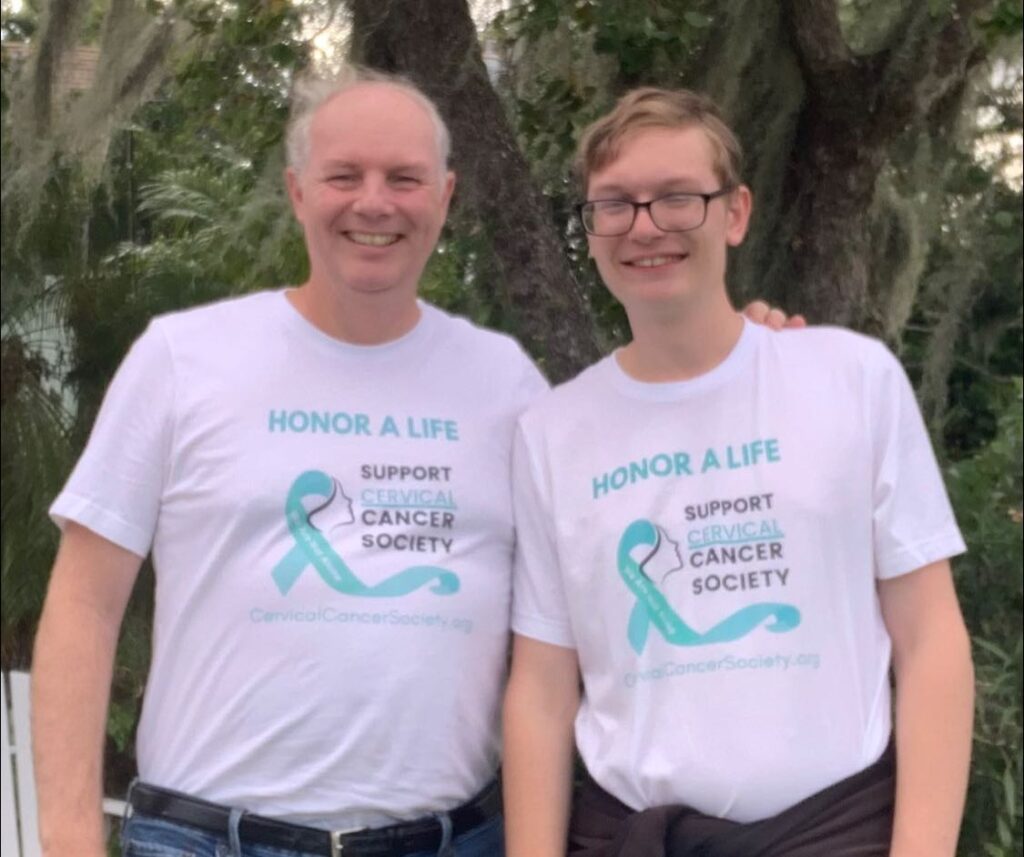
I supported Cervical Cancer Societ Heart with Chris Miller

Hi. I'm Chris Miller, and I would like to tell you what to expect when you get the word that you have Cervical Cancer.

There are a lot of things you need to look out for, need to think about, and should be aware of in general. My Heather and I went through it side by side, every step of the way, and the things I learned along our journey were very revealing about the system and the processes you need to think about if you want to get through it well. My hope is that this information helps you in some way.

The first thing I will tell you is that the Hospital and Drs will bombard you with information, and you WILL NOT remember even a third of it.

I don't care what you think you know about yourself and how detail-oriented you think you are. Trust me on this, and I'll tell you why. When the day comes that a Dr. looks you in the eye and tells you you have cancer, that is basically all you can think about for the next 15-20 minutes. They keep talking, but you aren't hearing it. You're just thinking, "OMG, I have Cancer. What does this mean? Am I going to be ok? The list of things going on in your head is endless, and you are not listening.

For the Dr. on the other hand, it is business as usual. Not being in your situation, they just keep talking, telling you your options, what they know for certain, what they think, what they want to do next, etc; completely unaware that you are not hearing them. It doesn't get much better in subsequent visits either.

Every visit with your Dr will be filled with too much information that can easily overwhelm. It is for this reason I recommend you bring someone else with you, and record the audio of each Dr visit with your phone so that you can go over it again later and make sure you don't miss, or forget, anything important.

Now, most Hospitals don't want you doing this, so I recommend you ask up front if it is alright, and tell them the reason why it is important. If they have an issue after that, you could be in the wrong place. If you feel comfortable with them however, and they don't want you to record under any circumstances, have them promise a print out of the details of the conversation before you leave.

Make sure that they don't simply summarize tests and next steps, but also include questions you asked, and the answers to them. If they are unwilling to do that as well, you ARE in the wrong place. Go somewhere else. Remember this. To them, it's a liability issue. For you, it could mean your life.

The second tip I have for you is organization.

The day you hear you have cancer, get life insurance that same day if you don't already have it. Please don't misunderstand that comment. I don't want you to perish, but in the event that you do, the last thing you want to do is leave your loved ones behind to pay the remainder of medical expenses, and make funeral arrangements out of pocket. The day that you are diagnosed, nobody knows about it, and you are still insurable. The day after that, once the records are written and recorded, that changes.

If you make sure you are covered on the same day, your insurance can still be inexpensive, in the $10-20 range, instead of $120-$300 range per month. I tell you this because believe me, when you are going through cancer every dollar counts.

Also, as soon as possible, get a power of attorney. Make sure it includes all needed areas to be covered so that if something happens to you, and you cannot make the decisions for yourself, someone YOU TRUST WITH YOUR LIFE has the legal authority to act on your behalf. I cannot tell you how much this serves a vital importance in your care.

Keep the original for yourself, and bring it with you to EVERYTHING. Never leave for any medical visit without it. Additionally, give a copy to the hospital, and to each department you work with in the hospital. You would be surprised how many times they will tell you they don't have a copy of it, even though you gave it to them. Make certain it includes as much detail as it can to protect you from them.

The POA we had written included specific details on giving me authority to make medical decisions for her, and to sign for her to receive any treatments, even after the case of her death, which we honestly never even thought would be a possibility when we started. In fact, we never thought it a real possibility until her final week. That's how confident we were that she would win against it. But the point is, we included everything we could think of.

It also covered my rights to handle her arrangements with banks, other medical and funeral facilities, insurance carriers, and creditors in the case of death. These things are immensely important to include because cervical cancer has a cure rate of just 19% after you get it. It's 91% if you catch it before it becomes cancerous, but afterward, it is a tough road. My beloved Heather was not in the lucky part of that percentage sadly, and having these clauses in there ensured her body was not mistreated after she passed, and that I could still act on her behalf even after most standard POAs would have been stopped.

I hate talking about this stuff, but it all gets extremely technical and legal in that worst case scenario, and believe me when I tell you that for the hospital involved, morality has nothing to do with their decision making. That document was literally the only thing that protected her because it kept me in the decision seat and not them.

Additionally, there were times that having that document as detailed as it was saved her life because it forced them to deal with me. I even had one Dr. tell me that he was the Dr. and he wasn't required to listen to me or do what I said as long as she was awake and coherent because that is how most medical POAs work, and he was going to do something that, in my opinion, could have killed her. I told him he was wrong and showed him our POA and he was forced to stop in his tracks and rethink his strategy. That, and 3 more events similar, kept her alive longer than she would have if we had not had the level of detail we did in that document.

Lastly, as soon as you can, go down to the stationery or office supply store and get a planner. You'll want a good one which includes the ability to make full page daily activity and itineraries with notes as well as the basic calendar blocks. Keep it with you all the time. You never know when a nurse or social worker is going to call and set an appointment or two with you. It can happen any day of the week, and any time of the day, so don't be caught unprepared.

I know at this point you're thinking, dear Lord, right, but the thing is, going through this is an extremely tough road, without a doubt. If, you set yourself up correctly however, you will have a decent chance. I cannot promise you more than that.

OK, now lets talk about three more vital things: Dr. Advice, Hospital Policy, and Second Opinions

When you are going through cancer, it is vital to get a second, or even a third opinion. You may not want to, but please do it anyway. Doctors really don't know everything, despite the fancy white coat implying otherwise, so you really should not just blindly listen to and do everything they say. Question EVERYTHING, and then research it on your own to see if you think it is really right for you or not. Nobody knows your body, mind, and spirit better than you do. Certainly not some Dr you only just met and only spends 15 mins with you at a time. So please, don't just take their word for things. Look it up, and seek counsel from others.

The Cervical Cancer Society has groups that can help with that if you are interested. Hospital policy, and Dr. advice do not always match. For this reason as well, one hospital Dr might be restricted from talking to you about something that another hospital Dr might not be. Drs are required to follow their hospital's policies or they could lose their job, and more importantly, their license. Even if they think there could be a better path, they are often forbidden in some cases from mentioning it to you or discussing it with you even if you bring it up. Second opinions from outside providers help you in this regard.

Even if you do convince a Dr to do something slightly outside of Hospital Policy, many times the hospital will reverse it. A case in point is when my Heather was told she needed follow up PET scans. Hospital policy said only scan the known infected area. We didn't feel comfortable with that because we know cancer spreads, especially following chemotherapy. We got the Dr to agree to a full body scan, but when we got to the facility on the day, their orders had been reverted back to local area only.

Looking back on it now, I know the right move would have been to walk away, talk to the Dr. and have it rescheduled the right way again with a direct note overriding standard hospital policy. We didn't do that however. We just went ahead and had her do the local scan, thinking we would have the rest scanned later after speaking to the Dr about it. Instead we found out she couldn't do it again for another 6 months because of some radiation that would cloud the scan and make it unreadable after. By the time that scan came around, the scan showed her entire body then had cancer. Had we not let that happen the first time, maybe we could have stopped it before it got out of control.

Heed the warning now. Full body or nothing, every time. Don't make the same mistakes we did. I cannot say for certain, but I believe in my heart that was the decision that eventually led to her death.

Lastly, let's talk people.

One of the things my Heather was so good at was getting people to fall in love with her. It worked on me. That is for sure. People would come from the other end of the hospital to see her if they saw her name on a list somewhere, even when they weren't treating her anymore. That is a gift she had.

I saw it as my job to get to know them as well, and make sure they got to know her enough to make those meaningful connections. The way I saw it was if they saw her as a friend, not just a patient, they would work harder for her, and they did. We really appreciated that. I highly recommend you do the same. Don't be a pushover who just goes along with everything they say, but be friendly, polite, and complimentary. That is a lesson I learned from my beloved, and it is one worth sharing.

Keep their names, numbers, and job descriptions in your planner. Write down any memorable notes about them like their kid's names, or their birthdays, if they share them. This will help you more than anything else when it comes to getting things done.

In closing

I do hope you find this information useful to you. I miss my sweet Heather so much every day, and I don't want to see another person end up with her fate. Cervical Cancer can be eradicated. It just hasn't been yet. So take heart and never lose hope as you go through this. Please support the vital mission of the Cervical Cancer Society as well if you can.

Donate to the cause. Tell your story. Join a group. Follow us on Social Media. Be present and help us make the changes needed to help make this disease go away. We are already making big swings in that direction with a new all-natural product formula we believe has the ability to cure HPV, the leading source for contracting Cervical Cancer. We are still seeking funding for the testing to prove the formula, but I am excited to think that we could end this forever if the formula works. Thank you for reading, and please remember to always keep smiling.

- Chris Miller

The Cervical Cancer Society is a nonprofit committed to education, prevention, and compassionate support for women and families affected by cervical cancer. Through awareness, research, and real stories, we aim to empower those facing the fight — and help the world understand how to prevent it. Find out more at: https://CervicalCancerSociety.org

Cervical Cancer Society

The Cervical Cancer Society is a nonprofit committed to education, prevention, and compassionate support for women and families affected by cervical cancer. Through awareness, research, and real stories, we aim to empower those facing the fight — and help the world understand how to prevent it. Find out more at: https://CervicalCancerSociety.org

Back to Blog
Cervical Cancer Society Logo

© 2025 Cervical Cancer Society - All Rights Reserved.

Proudly Hosted with WebHost Rocket - Rocket Fast Websites